Multimode Fiber Repair & OTDR Testing:
OM3 10G to 300m, OM4 10G to 400m.
OM3 and OM4 are the short-reach fiber standards for in-building and campus runs where distance exceeds Cat6A's 100m but singlemode is overkill. In NYC we see OM3 in data closet uplinks and OM4 in newer backbone pulls. We fusion-splice, OTDR-test, and handle MPO/MTP trunks across commercial deployments.
Where Multimode Fiber Fits
OM3 and OM4 are the current multimode fiber standards per ANSI/TIA-568.3-E. OM3 handles 10 Gbps to 300m per the spec; OM4 handles 10 Gbps to 400m, 40GBASE-SR4 to 150m, and 100GBASE-SR4 to 100m with parallel optics per IEEE 802.3bm.
In NYC commercial we see OM3 in data closet uplinks between the main IDF and distribution switches per floor, and OM4 in newer backbone pulls where 40G or 100G is a real near-term plan. For in-building backbones under 400m, OM4 multimode is usually the more cost-effective choice than singlemode.
The service story centers on connector contamination (the single most common multimode failure), OM3 vs OM4 confusion at splicing, and macrobends from tight-corner installs. We OTDR-test every multimode repair with insertion loss and end-face inspection reports delivered as PDF.
The Multimode Service Categories
OM3 and OM4, LC and SC patches, MPO trunks, splice work.
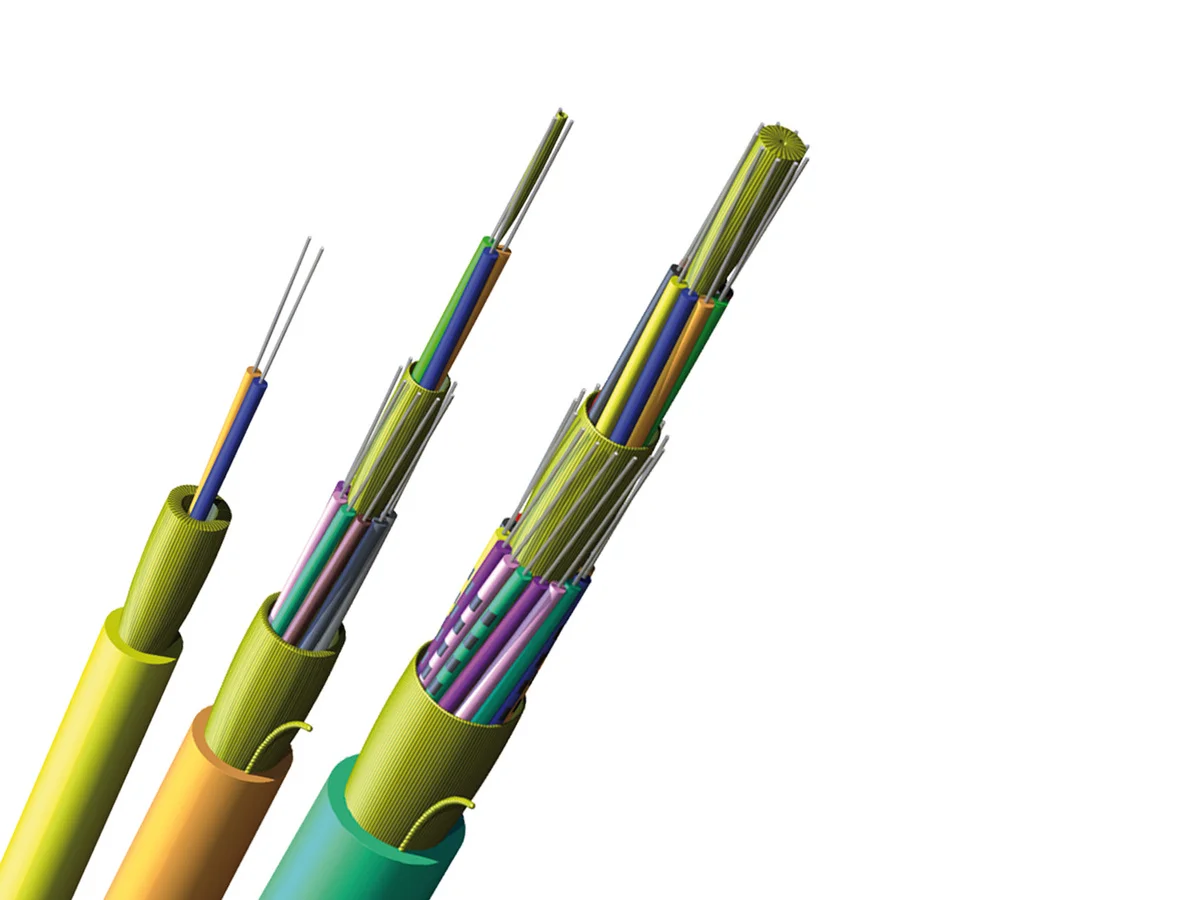
OM3 10G backbone
10 Gbps to 300m per TIA-568.3. Common choice for data closet uplinks in multi-floor buildings where the switch stack sits in the main IDF and distribution switches live per floor.
OM4 10G/40G/100G backbone
10 Gbps to 400m, 40GBASE-SR4 to 150m, and 100GBASE-SR4 to 100m with parallel optics per IEEE 802.3bm. Chosen where future proofing for 40G or 100G is a real plan. Jacket is also aqua, causing field confusion with OM3.
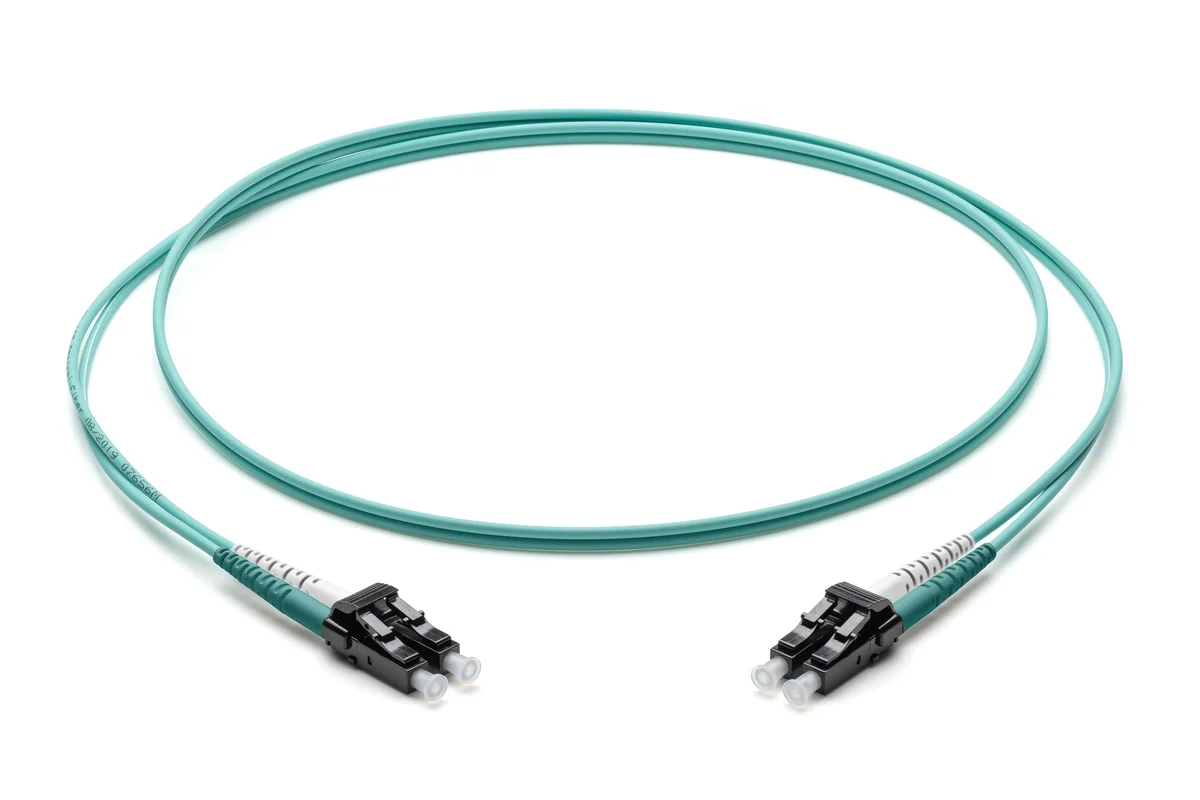
LC and SC pre-terminated patch cords
Short multimode jumpers between fiber patch panels and switch SFP+ transceivers. LC is the modern duplex standard; SC still appears on older gear.
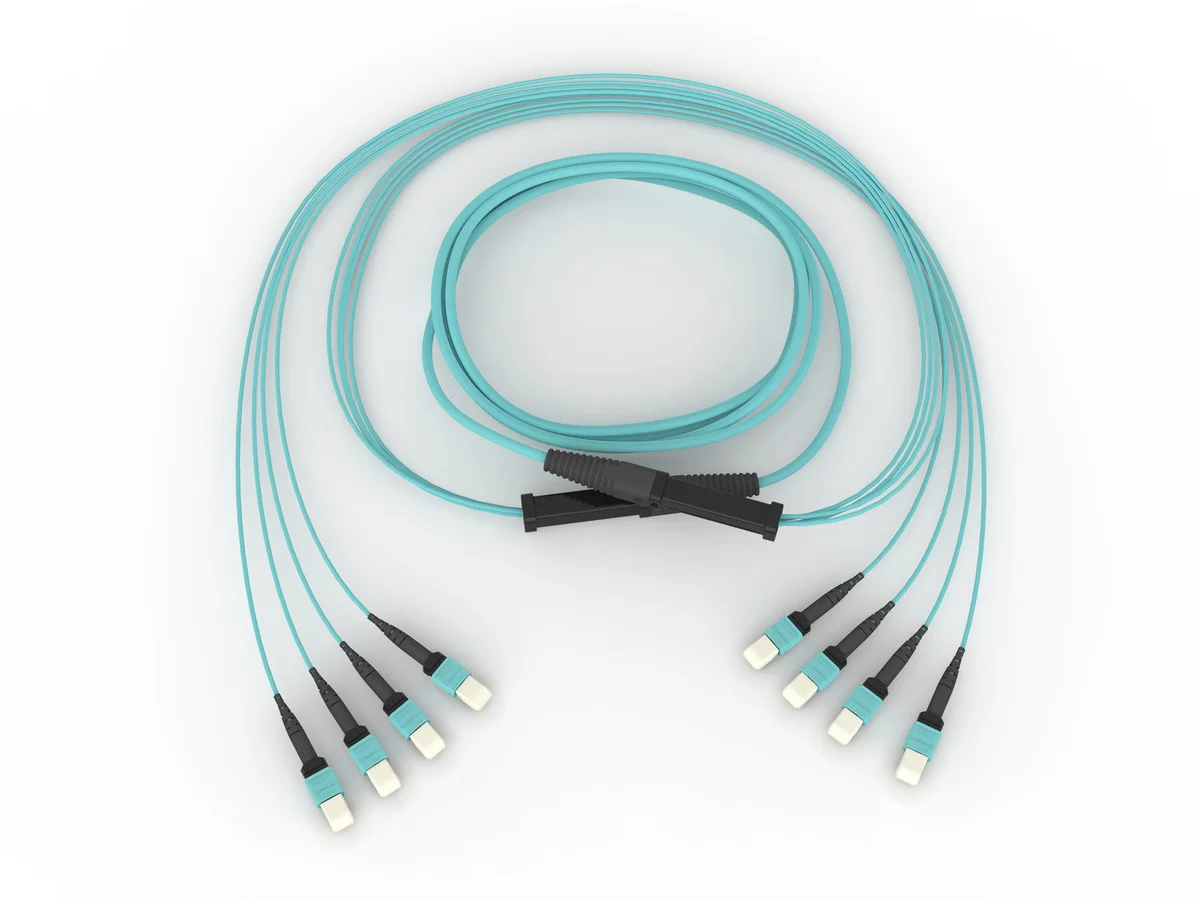
MPO/MTP trunks for high-density
12-fiber or 24-fiber MPO trunk cables terminated at a factory for data center and large commercial pulls. Faster to install than individual splicing.
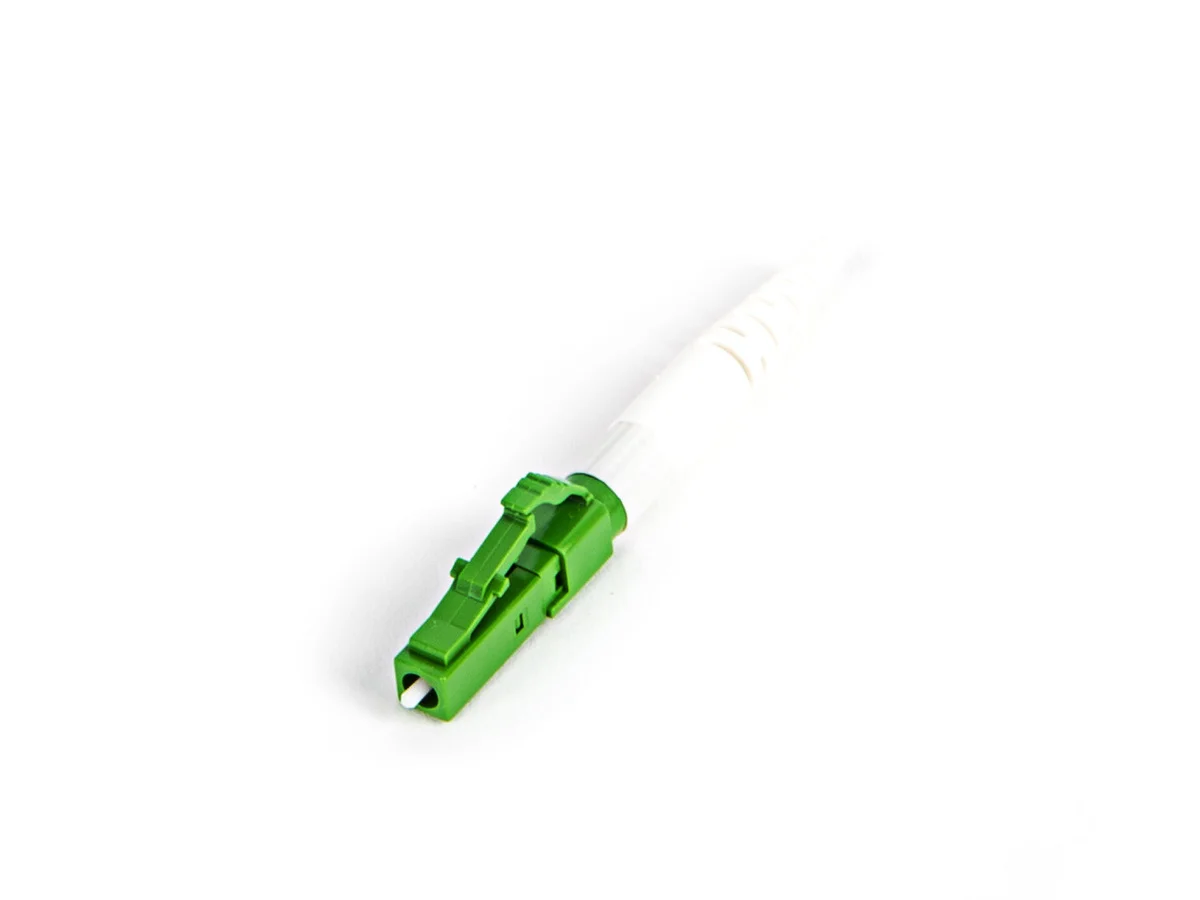
Preterminated vs field-terminated
We prefer factory-terminated and tested jumpers where possible. Field termination with mechanical or fusion splicing is slower and introduces loss, but is necessary for custom lengths and in-situ repairs.
What We Find in the Field
Multimode failures cluster around connector contamination, OM3/OM4 confusion, and macrobend damage.
Connector contamination
Single most common multimode failure. A speck of dust on an LC or SC ferrule end-face scatters light and raises insertion loss above budget. We inspect and clean with a scope before any splice work.
Affects: Any fiber connector exposed during moves, adds, or changes
OM3 vs OM4 confusion at splicing
Both have aqua jackets. Techs splicing OM3 to OM4 or mixing them in a backbone without documentation produce a channel that performs to the OM3 limit even where OM4 was pulled. We label at every panel and tray and verify with OTDR when the record is in doubt.
Affects: Backbone installs across multiple pulls, mixed-vendor jobs
Macrobends from tight-corner installs
Multimode is more tolerant than singlemode but tight corners at a cable tray entry or an IDF rack cause measurable light leakage. Shows up as higher-than-expected loss on an OTDR trace at the specific bend point.
Affects: Retrofit backbone pulls, cables routed through unprepared pathways
Launch-condition failures on short links
Older multimode LEDs and modern VCSEL lasers have different launch patterns. Mixing a VCSEL at one end with an LED-era patch panel at the other causes modal dispersion loss that measures badly in Fluke testing.
Affects: Buildings mixing newer and older fiber endpoints
Fusion splice vs mechanical splice loss
Mechanical splices on multimode add roughly 0.3 to 0.5 dB each. Three or four mechanical splices in a backbone eat the entire loss budget. We fusion-splice backbone fiber and use mechanical splices only for emergency temporary repair.
Affects: Repair jobs where speed was prioritized over spec
The Service Specifics
OM3 and OM4 are the current standards per ANSI/TIA-568.3-E for new multimode installs. We OTDR-test every multimode repair with insertion loss and end-face inspection reports delivered as PDF.
OM3 is appropriate for in-building 10G backbones; OM4 is appropriate where 40G or 100G is on the real roadmap. Legacy OM1 and OM2 plants should be mapped before being asked to carry modern speeds. For distances over 500m or inter-building runs, singlemode (OS2) is usually the right choice.
Pre-OM3 Install Base
Legacy multimode still present in NYC commercial.
OM1 (62.5/125 orange jacket)
Still in buildings from the 1990s. Supports 1 Gbps to 275m but not 10G at useful distances. We identify and plan migration to OM3/OM4 for buildings needing 10G backbone.
OM2 (50/125 orange jacket)
From early 2000s. 10G only to 82m. More capable than OM1 but still inadequate for modern campus backbone.
Pre-standard multimode
Where jacket color and spec are not reliable guides. Requires OTDR to confirm the actual class.
If Your Specific Problem Is...
For a specific multimode fiber symptom.
Multimode Fiber FAQ
Multimode Fiber Need Repair? We Fusion-Splice and OTDR-Test.
OM3, OM4, LC, SC, MPO. Fusion splice and OTDR certification. Licensed and insured.