Cat6A Cable Repair, Termination, and Testing:
10G at 100m, PoE++ 90W, Unshielded or Shielded.
Cat6A is the current premium copper standard, supporting 10 Gbps across the full 100m channel per ANSI/TIA-568.2-E Category 6A. Chosen in NYC for new commercial buildouts expecting 10G to the desk, high-density Wi-Fi 6/6E AP uplinks, and PoE++ (90W Type 4) deployments. We terminate, repair, and Fluke-certify Cat6A across NYC commercial and data center.
Where Cat6A Lives in NYC
Cat6A is the appropriate choice for runs over 55m needing 10G, for high-density Wi-Fi 6/6E AP backhaul, and for PoE++ endpoints. NYC commercial buildouts targeting 10G to the desk, newer tenant improvements in Class A office, and data center top-of-rack applications all specify Cat6A.
The service story centers on install discipline. Cat6A's larger diameter (Panduit's shielded Cat6A is 7.3mm across versus 5.7mm for its Cat6) and larger bend radius create install challenges in retrofit situations: pre-war building risers, converted industrial lofts, and buildings that upgraded cable spec without upgrading pathways. On shielded Cat6A, shield continuity end-to-end is also critical; a single ungrounded keystone can downgrade the whole channel.
Not every drop needs Cat6A. For office runs under 30m where Cat6 handles 10G fine, Cat6A is over-specification. We give honest advice on the trade-off before quoting.
The Cat6A Service Categories
Unshielded and shielded cable, shielded hardware, PoE++ runs, data center.
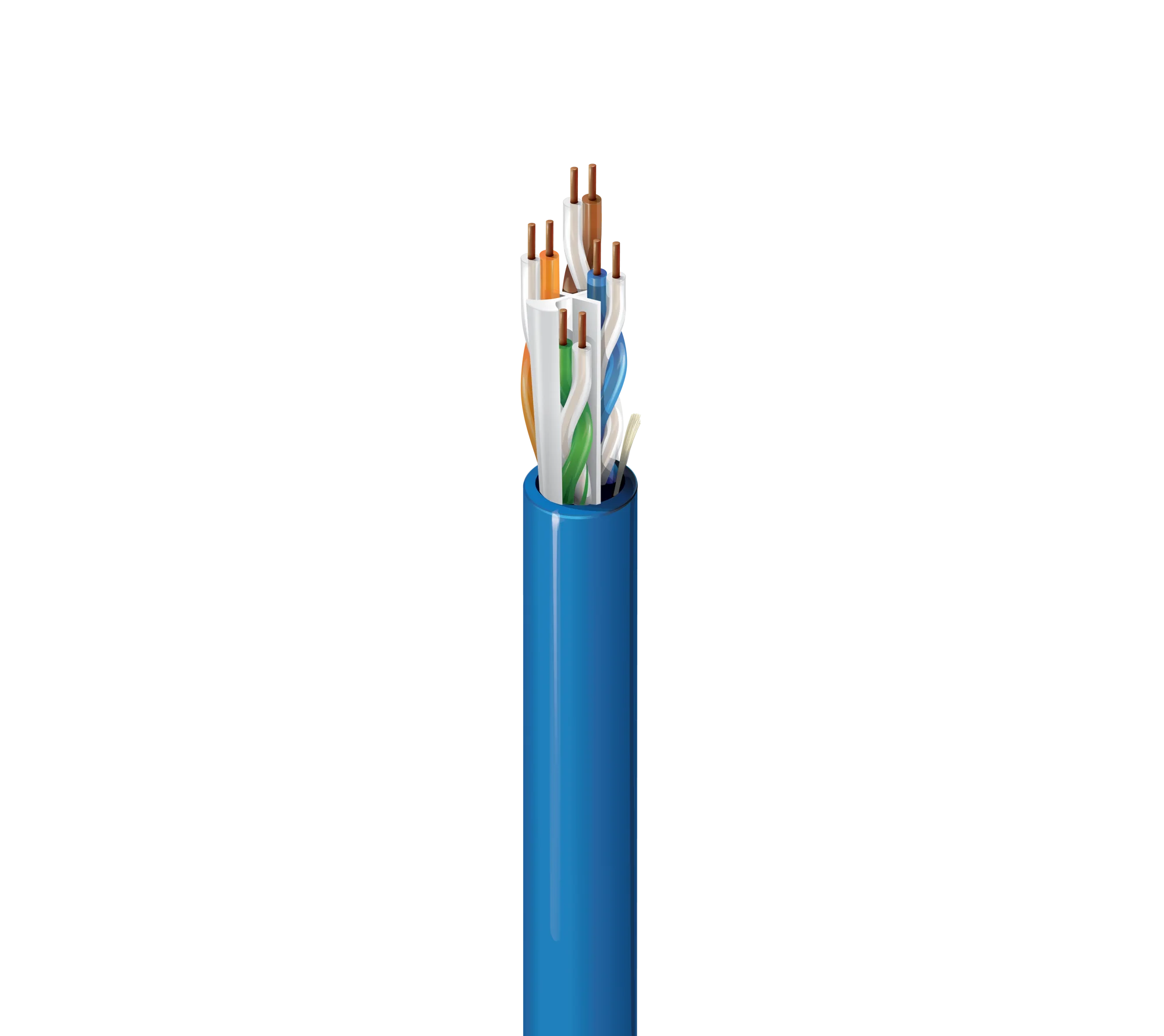
Standard U/UTP Cat6A
Unshielded Cat6A, the most common type in US commercial installs. Thicker than Cat6, so conduit fill has to be recalculated when upgrading.
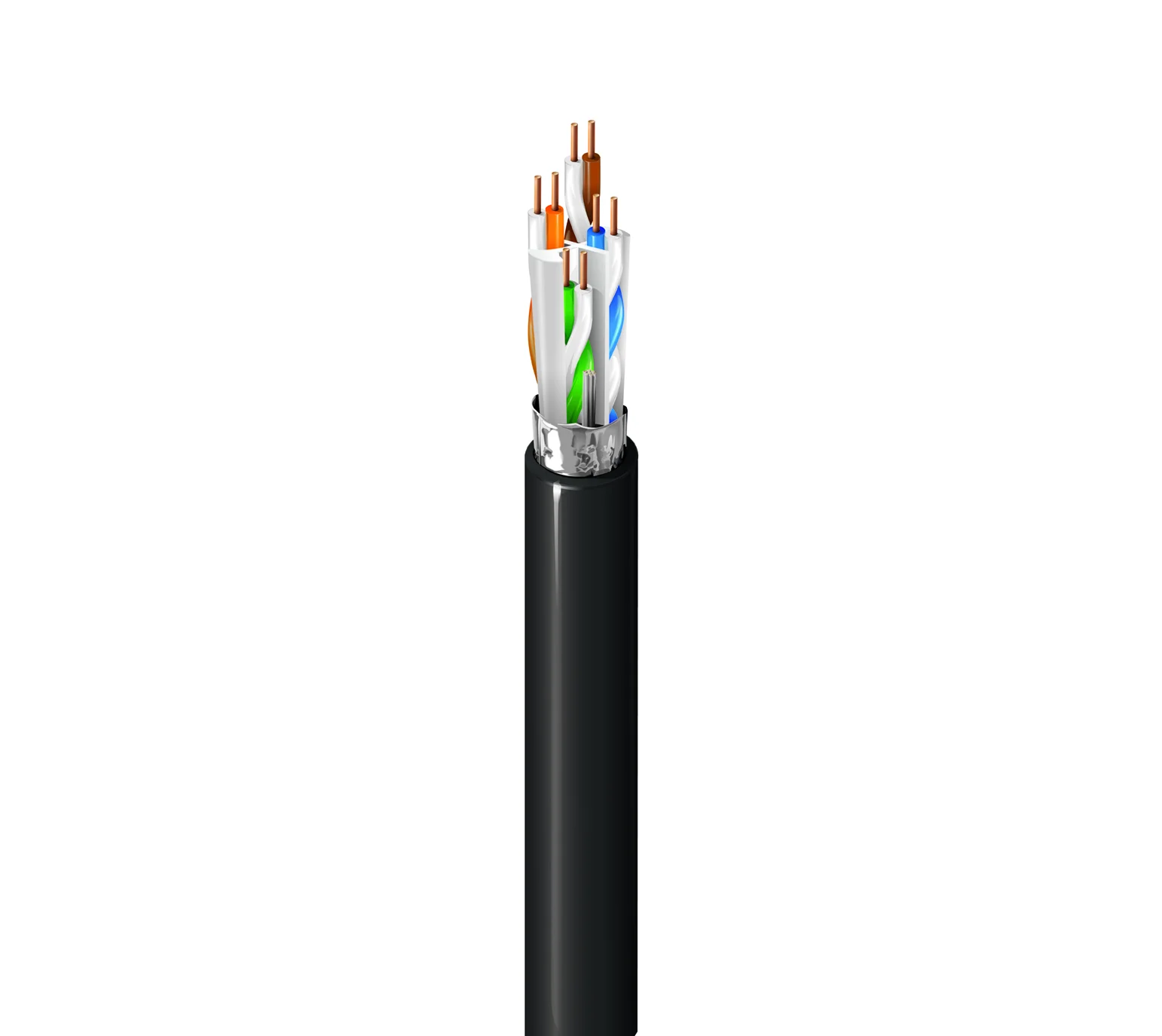
Shielded Cat6A (F/UTP and U/FTP)
F/UTP has one overall foil shield; U/FTP has a foil around each pair. Both are thicker than U/UTP and need shielded jacks and panels bonded end to end. Used where extra noise protection is wanted.
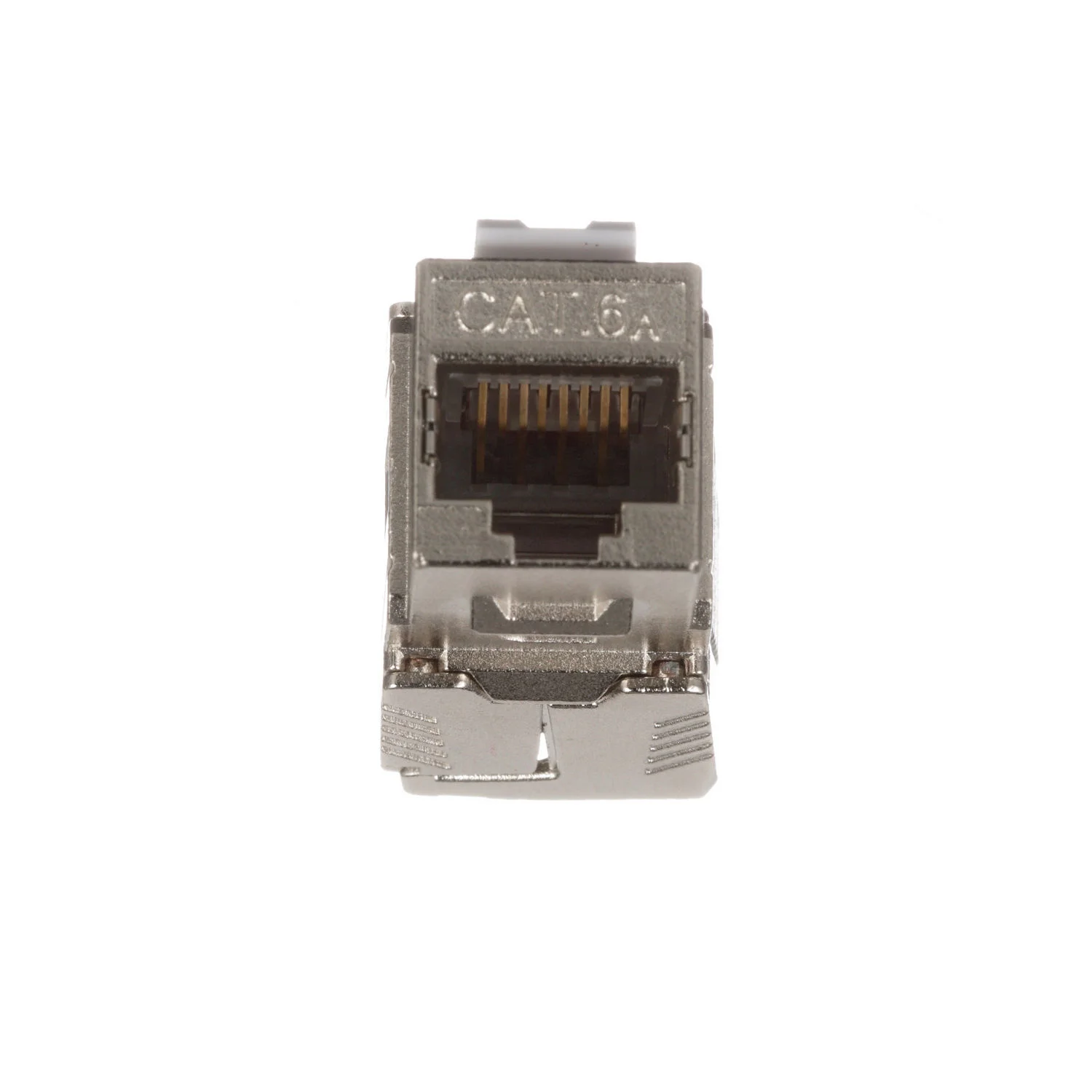
Shielded keystones and patch panels
Shielded Cat6A (F/UTP, U/FTP) needs shielded jacks and bonded patch panels so the shield runs through the whole channel. Mixing shielded cable with unshielded hardware leaves the shield ungrounded.
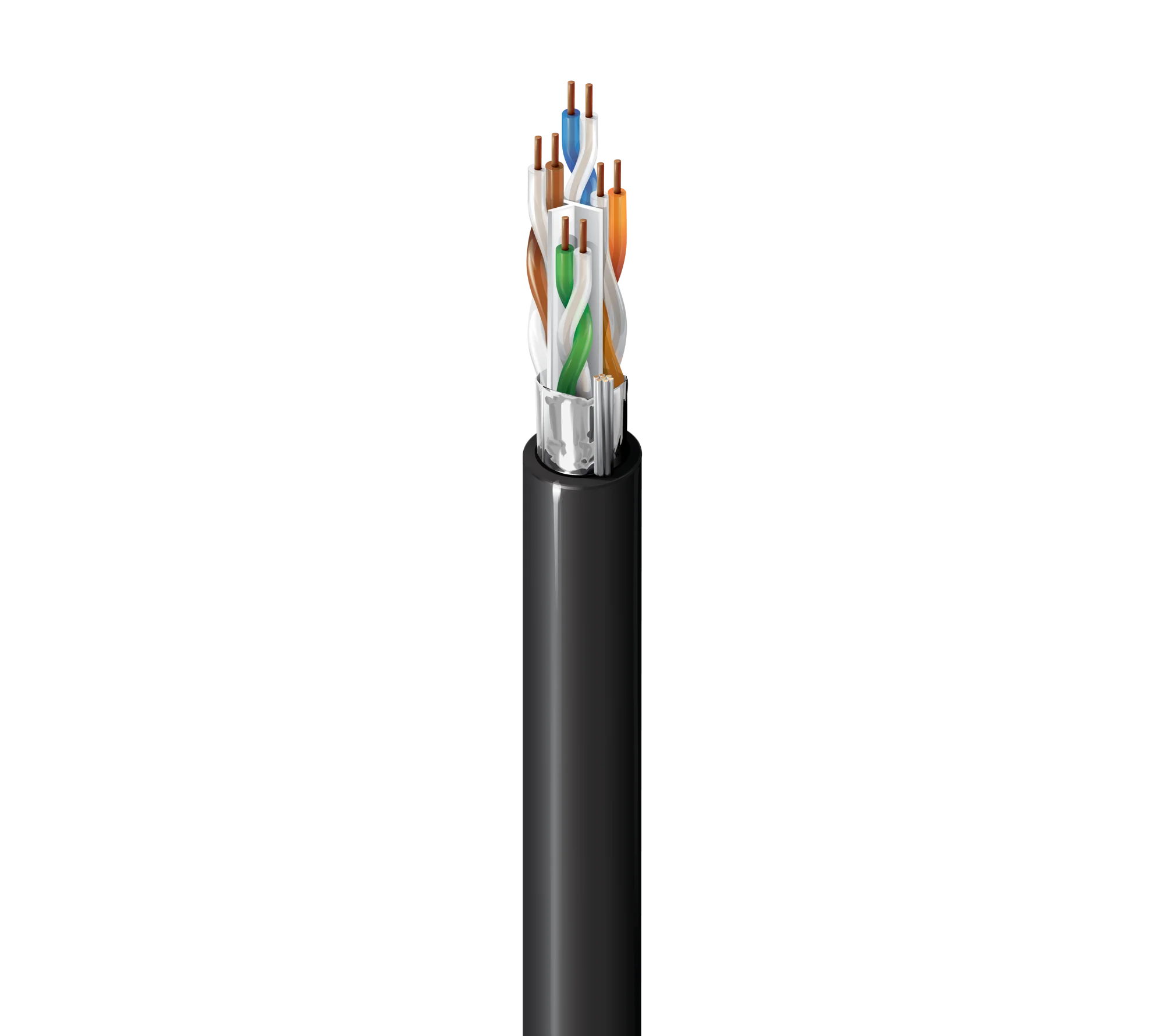
PoE++ ready runs for high-wattage endpoints
Cat6A handles 802.3bt Type 4 (90W PoE++) with lower heat buildup than Cat6, which matters for pan-tilt-zoom cameras, Wi-Fi 6E APs, and USB-C powered devices.
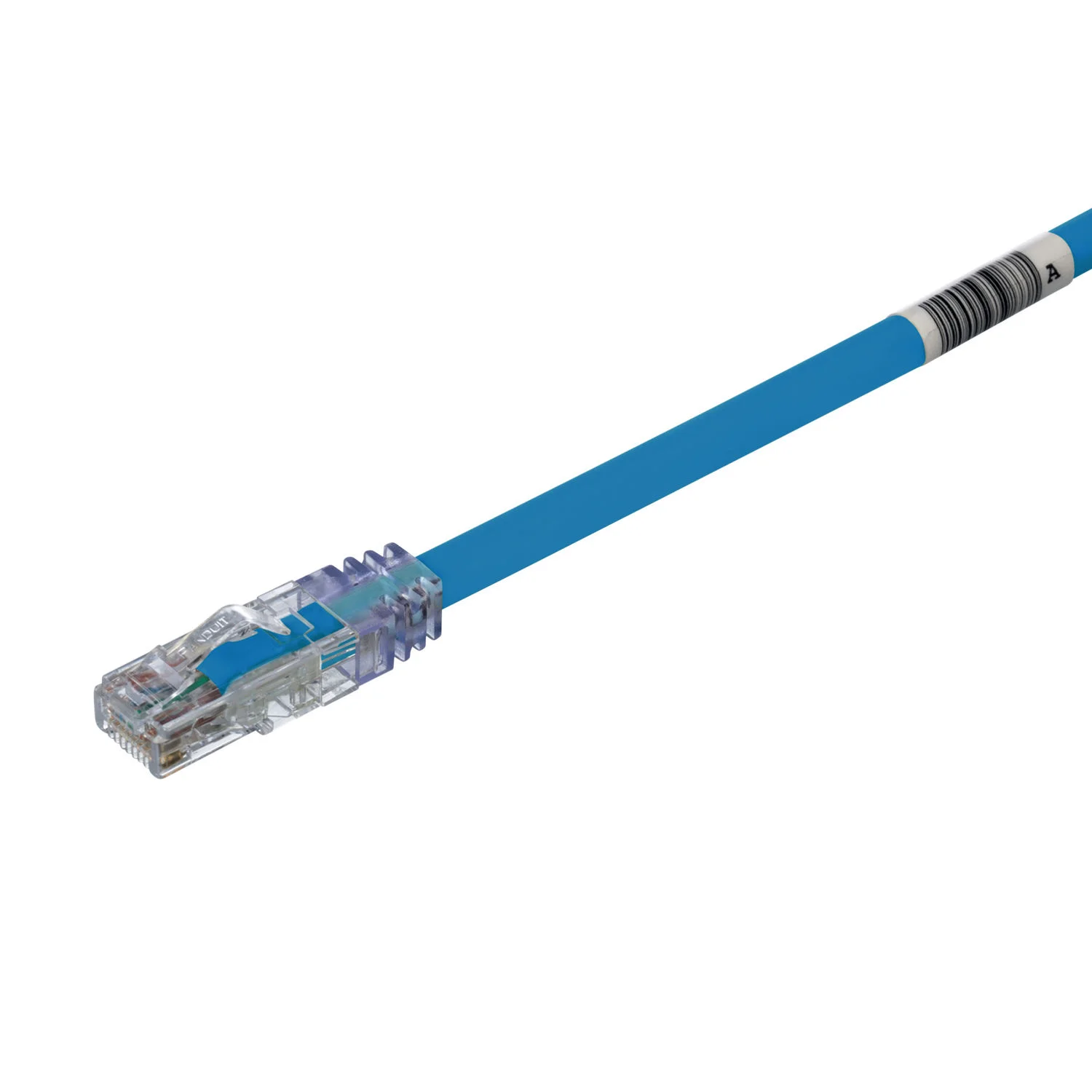
Data center and 10G backbone
Short Cat6A patch cables between top-of-rack switches and server NICs, often replacing SFP+ fiber where copper is cheaper per port.
What We Find During Testing
Cat6A failures cluster around bend radius violations, shield continuity breaks, and over-specification.
Bend radius violations in pre-war building risers
Minimum bend radius is about 4 times the cable diameter, so thicker Cat6A needs wider bends than Cat6 (about 1.15 inch for Panduit shielded Cat6A versus 0.9 inch for its Cat6). Pre-war building risers were cut for smaller cable and installers often force Cat6A around corners that permanently damage the twist geometry.
Affects: Pre-war Manhattan apartment buildings, converted industrial lofts
Shield continuity broken at a jack or panel
Shielded Cat6A has to be bonded end-to-end. A single ungrounded keystone or a poorly bonded drain wire at a jack or panel breaks the shield and hurts performance under 10G load.
Affects: Shielded Cat6A with mixed-vendor hardware
Conduit fill exceeded, cable crushed
Cat6A's larger diameter means fewer cables per conduit. Installers who treated existing Cat6-rated conduit as drop-in replacement often crush the outer jackets, causing return loss and NEXT failures.
Affects: Retrofit buildouts, buildings that upgraded cable spec without upgrading pathways
Alien crosstalk from parallel runs in large bundles
Cat6A can fail alien crosstalk tests in large, tightly combed bundles. We separate critical runs and verify with Fluke alien crosstalk testing when the bundle count is high.
Affects: High-density data closet feeds, large office pulls
Over-specification without need
Not a cable failure but a frequent complaint. We see Cat6A installed where Cat6 would have done the job for noticeably less cost. Worth flagging in bids where the drop count is large and 10G to every port is unrealistic.
Affects: Over-engineered small-office installs
Keystone IDC damage from oversized conductor
Cat6A conductors are typically 23 AWG with thicker insulation. Keystones not rated for the thicker insulation can fail to make solid IDC contact. Looks fine, tests marginal.
Affects: Cheap online keystone purchases, non-matched hardware
The Service Specifics
Cat6A is appropriate for runs over 55m needing 10G, for high-density Wi-Fi 6/6E AP backhaul, and for PoE++ endpoints. ANSI/TIA-568.2-E Category 6A certification covers it; we Fluke-test to the Cat6A 100m channel.
Where Cat6A does not pay off: short office drops under 30m where Cat6 handles 10G fine, or small-tenant buildouts where cost dominates. We give honest advice on the trade-off before quoting.
Early-Era Install Issues
Legacy Cat6A from the first wave of installs.
Early Cat6A from 2008-2012
Early cable from the first wave of Cat6A installs can test marginally against current Cat6A limits. We test each run before relying on it for 10G.
Hybrid Cat6A backbone / Cat6 drops
Installs where backbone is Cat6A but drops are Cat6, limiting the channel to Cat6 performance. We identify and recommend upgrade path if 10G full-channel is the goal.
If Your Specific Problem Is...
For a specific Cat6A symptom.
Dead Network Jack
Cat6A drop not passing data at expected spec.
Dead-jack repair → 02 / SymptomCable Cut, Crushed, or Damaged
Cat6A run damaged by construction or crushed in conduit.
Damage repair → 03 / SymptomCable Certification & Fluke Testing
Cat6A Fluke DSX certification testing to augmented spec.
Cable certification testing →Cat6A Cable FAQ
Need Cat6A Repair or Augmented Pulls? We Terminate and Certify.
Fluke certification testing, shielded system discipline, PoE++ ready. Licensed and insured.